
TLID0015 — Load and unload goods/cargo
Safe loading and unloading of goods and cargo — planning the load, weight distribution, manual and equipment-assisted handling, restraint checks and freight documentation for transport and warehouse operations.
Course Overview
This unit involves the skills and knowledge required to load and unload goods and/or cargo.
It includes loading and unloading goods and cargo, securing and protecting a load and completing all required documentation in accordance with relevant state or territory roads and traffic authority regulations and permit requirements.
View TLID0015 on training.gov.au →TLID0015 Load and unload goods/cargo is the nationally recognised competency unit covering the skills and knowledge required to safely load and unload goods and cargo from vehicles, containers and storage areas within the transport and logistics industry. The unit takes you through the full loading cycle — preparing for the job, checking documentation and load plans, positioning and stacking freight for correct weight distribution, applying restraint, and completing the unloading and record-keeping tasks that close the job out.
Loading and unloading is where a large share of transport injuries and freight damage occur, and under the Heavy Vehicle National Law (HVNL) the people who load a vehicle share Chain of Responsibility obligations for its mass, dimension and load restraint. This half-day course gives drivers, loaders, depot staff and rural workers across the Darling Downs a practical, structured approach to moving freight on and off vehicles safely — whether that freight is palletised goods, bagged product, machinery parts, drums or general cargo handled by hand or with mechanical aids.
What You'll Learn
- Plan a loading or unloading job — confirm the consignment, check delivery dockets, manifests and load plans, and identify any special handling requirements
- Identify hazards in the loading area — vehicle movement, uneven ground, overhead obstructions, pedestrians and the cargo itself — and apply control measures before work starts
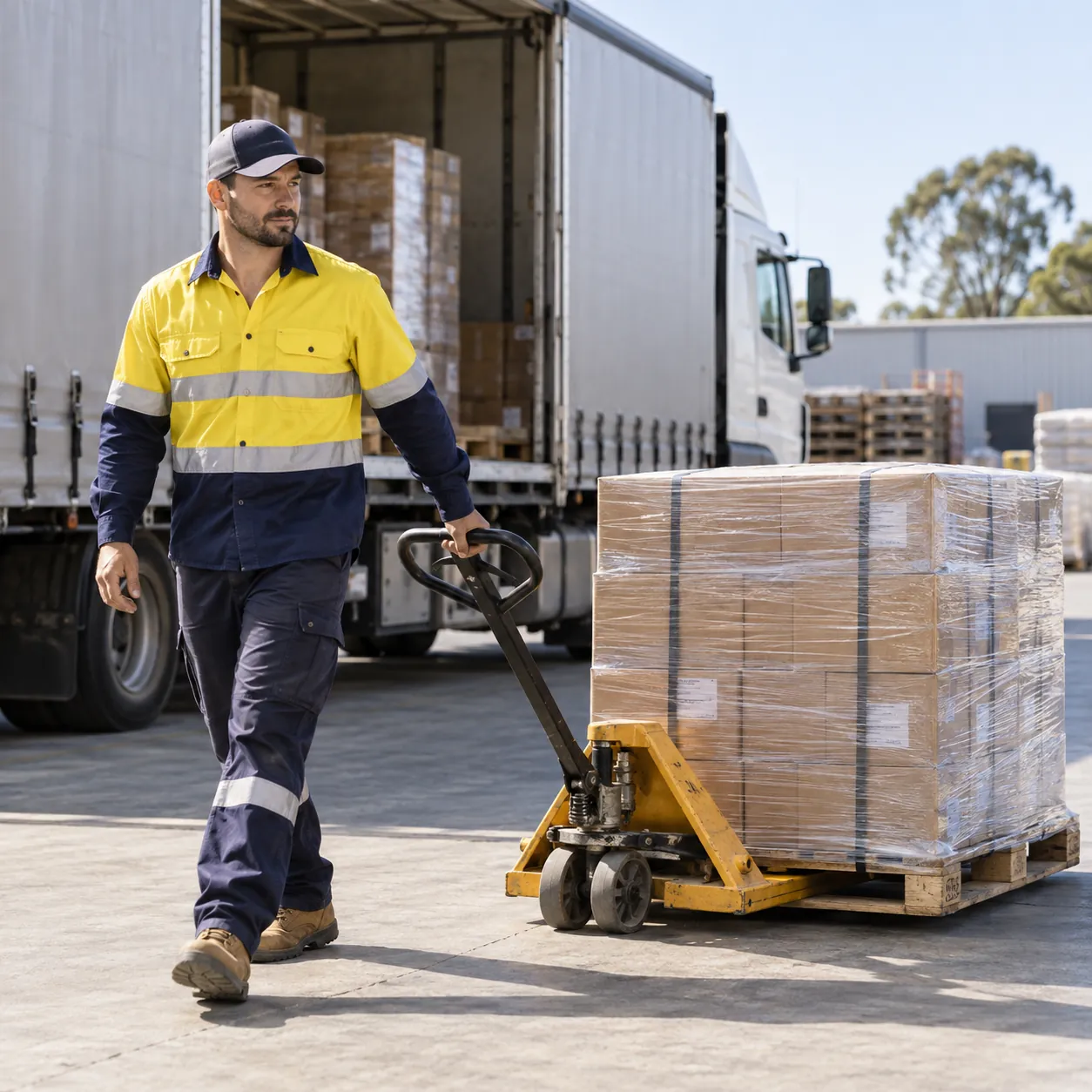
- Select and use the right handling method for the load — manual handling techniques, trolleys, pallet jacks and other mechanical aids — in line with site procedures
- Position and stack goods for correct weight distribution, axle loading and stability, and check the load stays within vehicle mass and dimension limits
- Check that the load is restrained and secured before the vehicle moves, in line with the Load Restraint Guide and HVNL requirements
- Unload goods safely in sequence — release restraint correctly, control shifting cargo and place goods in the designated area
- Identify and report damaged, short-delivered or incorrectly consigned freight and complete loading and unloading records accurately
- Understand your Chain of Responsibility obligations as a loader or unloader
Assessment Method
Assessment combines a practical loading and unloading task — participants plan the job, check documentation, load and position a sample consignment on a vehicle or simulated load bed, confirm restraint and then unload it safely — with a written knowledge questionnaire covering hazard identification, weight distribution, restraint checks and HVNL loader responsibilities.
Prerequisites
None — open to all workers involved in handling freight. No prior transport or logistics training is required. Participants must be physically capable of performing manual handling tasks. Note that this unit does not include forklift or other High Risk Work Licence training — workers who operate a forklift as part of loading should hold TLILIC0003 separately.
Who Should Attend
- Truck drivers and owner-operators who load and unload their own vehicles
- Warehouse, depot and distribution centre staff in receival and despatch roles
- Rural merchandise, grain, fertiliser and farm supply workers loading customer and company vehicles
- Couriers, delivery drivers and offsiders handling general freight
- Workers building competency toward a Certificate II or III in Driving Operations, Logistics or Warehousing Operations
- Supervisors and employers with Chain of Responsibility obligations for loading activities